Imagine buying a brand-new car, driving it gently for barely a year, and then discovering that chunks of rubber are literally peeling off your tires. Naturally, you'd expect the dealership to take care of it. There's just one problem: that's not how tire warranties work.
Most drivers don't realize that the tires on a new vehicle are warranted directly by the tire manufacturer, not the automaker. When something goes wrong early on, knowing who holds the liability—and knowing exactly what to say to the shop—makes all the difference.
That's what happened with my 2019 Audi Q7. At just 13,000 miles, both front tires began shedding chunks of outer tread. What followed involved a little technical homework, neutralizing a questionable diagnosis from a local tire technician, some quattro AWD mathematics, and an eye-opening look at who actually gets paid to do what.
The result? I paid just $282 out of pocket—effectively settling the minor prorated wear on the first 13,000 miles—and drove away on four brand-new Goodyear all-weather tires that delivered another 57,000 miles of service.
1. The Discovery: Tread Chunking at Just 13,000 Miles
During a routine inspection at around 13,000 miles, I noticed something seriously wrong with both front tires. Small flakes and large slabs of rubber were physically breaking away from the outer tread blocks.
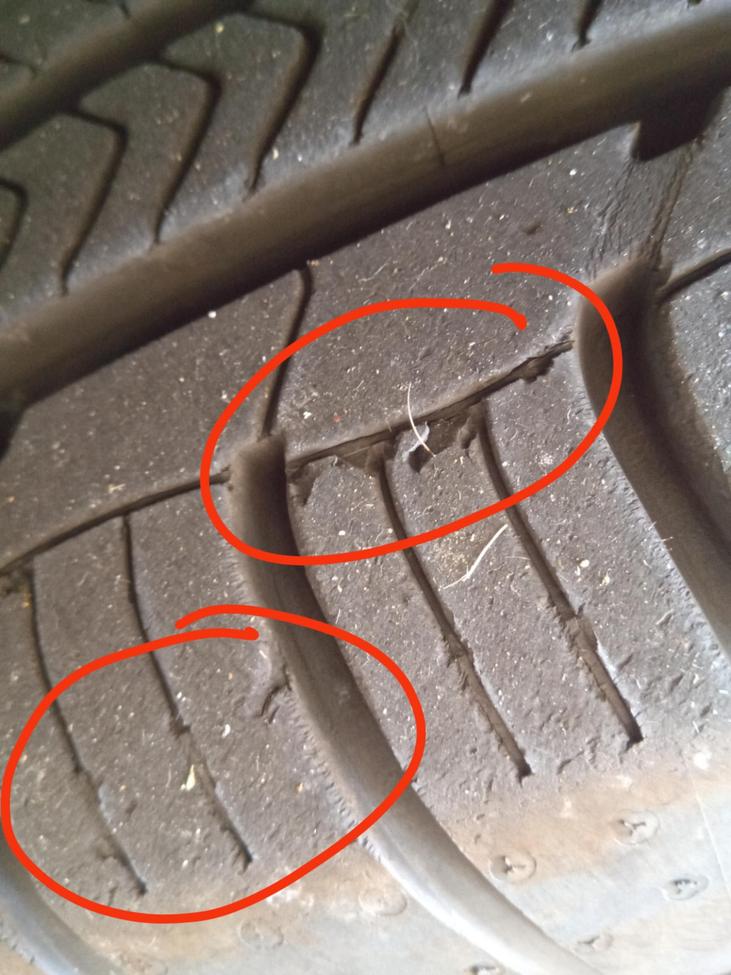
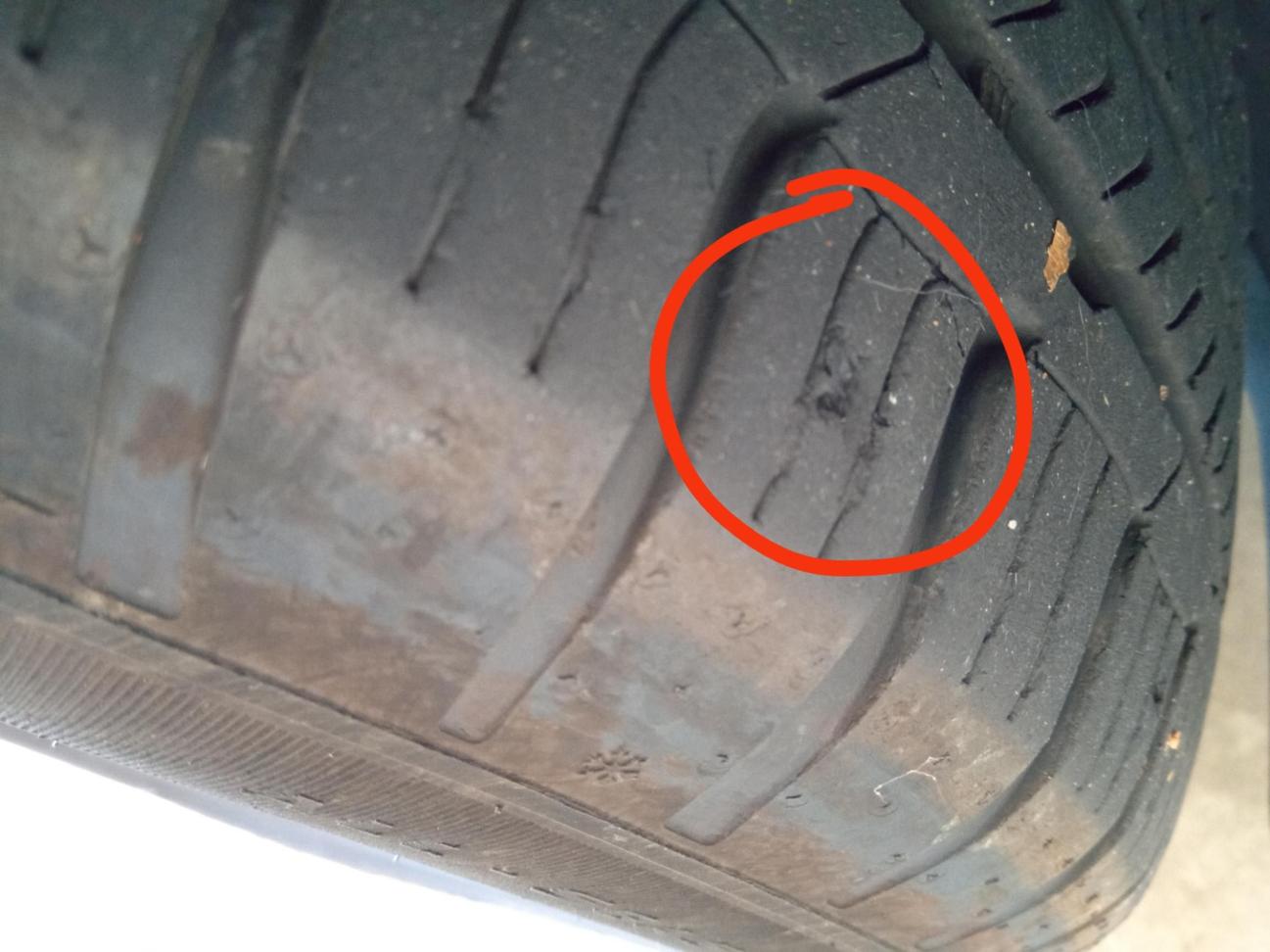
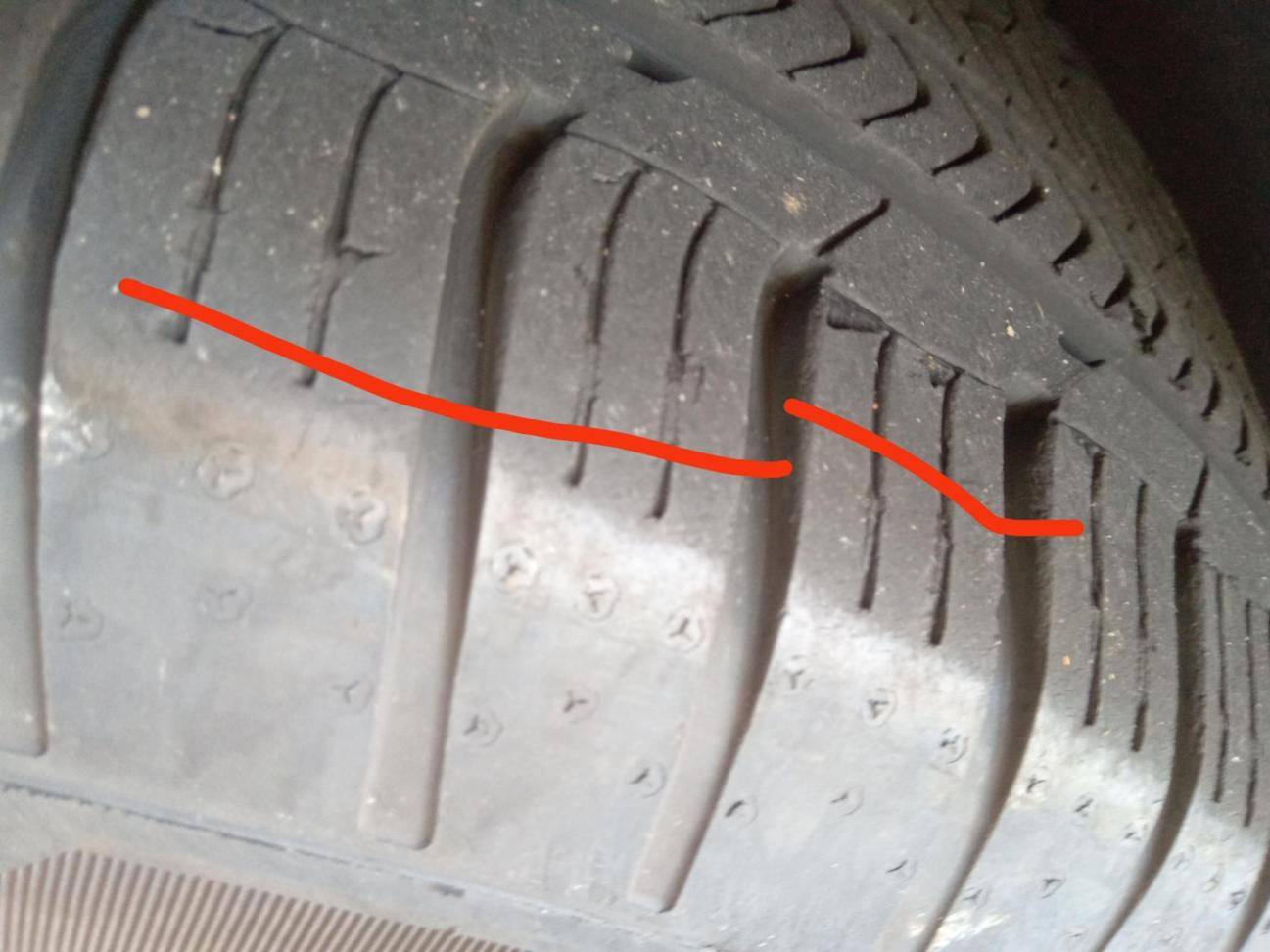
These weren't worn-out tires. All four still had approximately 8/32" of tread remaining. Tire pressures had been maintained meticulously, and the Q7 had never touched an unpaved road.
In the tire industry, this failure mode is known as tread chunking. On heavy, modern luxury crossovers with aggressive suspension geometry, the front tires experience substantial scrubbing forces during tight, low-speed turns. If the rubber compound cannot withstand those repeated shear stresses, the outer tread blocks tear apart.
Rather than making an hour-long trip to an Audi dealership, I went straight to the company responsible for the tire warranty: Goodyear.
There was, however, one specific benchmark I needed first. I called the Audi service department with a single technical question:
Drivetrain Specification
What is Audi's maximum allowable tread-depth difference across tires for the quattro AWD system?
3/32"
That little number became my leverage later.
2. The TSB That Almost Applied to My Q7
Before filing the claim, I did some homework. Browsing through Audi owner forums revealed that tread chunking was an acknowledged epidemic on the second-generation Q7 platform.
Audi had even issued an official technical service bulletin covering the issue:
TSB 44 – Tire Wear, Goodyear Eagle 285/45 R20 All Season (Bulletin 2048563)
A later revision of the bulletin officially extended coverage through the 2019 model year.
Promising news, right? Not quite.
The bulletin was written strictly for Q7s equipped with the factory 20-inch wheel package and 285/45 R20 tires. My Q7 Premium Plus rolled on standard 18-inch wheels with 255/60 R18 rubber.
It was the same Goodyear Eagle model line, the exact same compound characteristics, and the identical suspension tearing it up—but a different rim diameter.
Technically, my tires weren't on Audi's bulletin list, meaning there was no automated dealer replacement program for my car. That didn't mean the defect wasn't real; it just meant I needed to bypass Audi and pursue the claim directly with Goodyear corporate.
3. "Goodyear Doesn't Pay You to Be a Doctor"
Goodyear's corporate claims support was cooperative from the start. They agreed to evaluate the claim and referred me to a local Goodyear-approved service store for a physical inspection.
That was where the pushback began.
The technician took one quick glance at the damaged tread and immediately gave his verdict:
All four tread ribs showed completely even wear at 8/32". There was zero feathering, no camber wear, and no toe-related scrubbing. Yet the technician was already trying to convert a routine defect inspection into an out-of-pocket alignment dismissal.
Rather than arguing about suspension kinematics, I asked a simpler question:
Me:
"What did Goodyear pay you to do today?"
Technician:
"To inspect the tires and write down the symptoms."
Me:
"See? Goodyear doesn't pay you to be a doctor. Just write down what you actually found without a single word of diagnosis."
He paused, realized I had accurately outlined his scope of work, and agreed to write down only the objective facts: outer tread blocks peeling and chunking at 8/32" depth.
I walked out and let the inspection speak for itself. The next day at noon, Goodyear corporate called: the warranty claim was approved.
Sometimes the cleanest solution isn't debating someone's opinion; it's holding them to their actual job description.
4. The Quattro Math: Replacing All Four
With the defect acknowledged, the next hurdle was tire count.
All four original tires sat at 8/32" of tread. A brand-new replacement measures 11/32".
Remember Audi's 3/32" maximum allowable tread-depth tolerance? Slapping two fresh tires on the front axle would immediately place the vehicle right at that mechanical ceiling on day one.
On a full-time mechanical all-wheel-drive system, mismatched rolling circumferences put constant rotational stress and heat into the center differential. I explained this mechanical conflict to Goodyear. Their team was reasonable: rather than trying to limit the replacement to the front axle, they authorized a prorated warranty adjustment for all four tires.
Prorated Replacement Breakdown
$33 / tire
Four replacement tires: $132 total
The adjustment was approved, but there was no way I was putting that same factory model back on the car.
5. Why I Chose Pursuit-Rated Tires Instead
During the call, the Goodyear representative recommended sticking with the original factory-spec tire. I politely declined. Why reinstall the same chunking-prone compound on a heavy, all-wheel-drive SUV?
She agreed to let me select an alternate tire from the Goodyear family. The arrangement was simple: if my preferred tire had a higher retail price, I would cover the difference.
I selected the Goodyear Eagle Enforcer All Weather in 255/60R18.
This was an intentional pick. I had tracked the standard pursuit version of the Enforcer line, which was engineered for severe-duty law enforcement fleets and put through rigorous testing during the Michigan State Police patrol evaluations. If a tire is built to absorb high-speed pursuit abuse and aggressive curb strikes under patrol duties, its carcass and tread blocks are well-suited to handle a 5,000-pound luxury crossover.
The All-Weather (AW) variant also carried the Three-Peak Mountain Snowflake (3PMSF) rating for severe-snow traction.
The trade-off? Goodyear offers zero treadwear mileage warranty on the Enforcer line due to its fleet and severe-service mandate. But considering how quickly the factory passenger compound peeled away, trading a paper mileage promise for reinforced pursuit durability was a calculated risk worth taking.
6. The $18 Fee That Disappeared
Once the tires arrived and the shop completed the installation, the invoice included an unexpected line item:
$18 Tire Disposal & Recycling Fee
These weren't ordinary spent tires heading for the municipal rubber shredder. They were defective warranty returns being boxed up and sent back to Goodyear corporate for defect verification.
I pointed that out at the counter:
Right on cue, the technician stepped into the lobby, overheard the discussion, and backed me up immediately:
The $18 charge was removed from the ticket on the spot.
7. The Final Bill: $282 Out of Pocket
Here is how the final checkout math worked out:
The Final Tally
To be clear, this wasn't getting four free tires out of thin air. Instead, the $282 accounted for the minor prorated wear on the first 13,000 miles, plus standard mounting and balancing labor. Rather than losing money on defective tires, that small investment rolled directly into a fresh set of reinforced severe-service rubber.
8. Key Takeaways for New-Car Owners
1. The Tire Maker Holds the Warranty
Automaker bumper-to-bumper warranties explicitly exclude tire wear and defects. Check the separate tire warranty guide in your glovebox and go straight to the tire manufacturer.
2. Keep Technicians Focused on Facts
If a shop is assigned to document a warranty claim, make sure the tech logs only physical symptoms. Don't let unsupported speculation about alignment or inflation ruin your claim.
3. Check TSB Specifics Closely
Service bulletins prove known compound defects, but they are often restricted to specific wheel packages. Even if your tire size is excluded, use the bulletin to demonstrate compound issues when talking directly to corporate.
4. Leverage AWD Tolerances
Know your AWD system's allowable circumference variance. Audi's 3/32" limit provided the mechanical justification required to replace all four tires rather than leaving mismatched axles.
5. Look Beyond Mileage Warranties
Fleet, commercial, and severe-duty tires frequently forgo mileage guarantees in favor of puncture resistance and durable compounds. Build quality often matters more than warranty mileage targets.
6. Audit Every Invoice Line Item
Always verify disposal fees. If defective warranty tires are being returned to the manufacturer for analysis rather than scrapped locally, that scrap fee shouldn't be on your bill.
9. The Real Test: 57,000 Miles Later
Was choosing the fleet-grade Enforcer tires actually worth the gamble?
One tire from this set eventually met an untimely end during a highway trip, where a botched repair attempt at a national shop ruined its bead. That ordeal became a separate story with its own set of hard-won lessons.
The rest of the set delivered beyond expectations. Despite having zero treadwear mileage warranty, the Enforcers performed through every season without a hint of outer tread chunking.
By the time the set was finally retired recently, they had logged an impressive 57,000 miles and still had 4/32" of tread remaining.
Long-Term Return on Investment
57,000 Miles
Delivered on pursuit-grade all-weather rubber
Retired with 4/32" remaining tread and zero repeat chunking.
Resolving tire issues early isn't about looking for a free ride. It's about knowing who holds the warranty, understanding the drivetrain requirements, and verifying the invoice details.
And when a heavy SUV chews through factory rubber, upgrading to a fleet-tested tire—even one without a mileage warranty—can turn an early headache into thousands of trouble-free miles.