People always ask me how my fruit trees are so huge, healthy, and productive. My answer is always the same: I don't do anything. I don't even water them starting in their second year.
Naturally, that answer is never well accepted, and to be honest, I used to be just as confused as my friends. By every conventional gardening standard, neglect should yield small, struggling trees. Yet my orchard is overflowing. My pear tree produces thousands of fruits most years, and my peach trees get so heavy with massive, gorgeous fruit that the branches literally bend to the ground under the weight of their own success. In fact, every single fruit tree in my yard is an exceptional producer year after year.
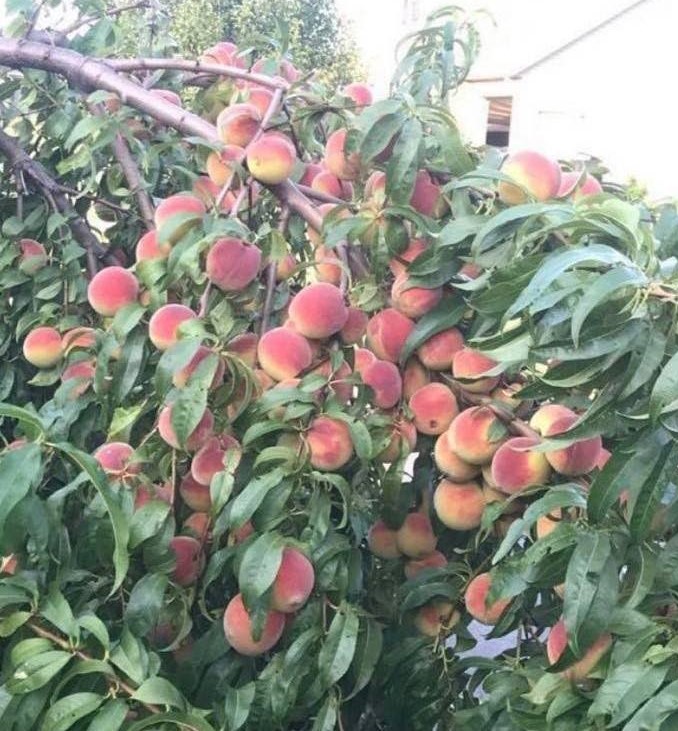
I think I finally unlocked the secret myself recently. It turns out the key to my thriving, self-sustaining orchard was actually a classic "beginner's mistake" I made over ten years ago when I first put them in the ground—and a "mistake" I continued to make as recently as four years ago on a pear tree that is already producing massive yields of giant fruit this season.
Most people buy dwarf fruit trees expecting them to stay a neat, manageable 8 to 10 feet tall—a height specifically engineered so you can harvest without needing a ladder. My trees, however, ignored that memo entirely. They tower over the yard at an imposing 12 to 15 feet high, bursting with standard-sized vigor, deep root anchors, and undeniable health.
What "Should" Be Done vs. What I Actually Did
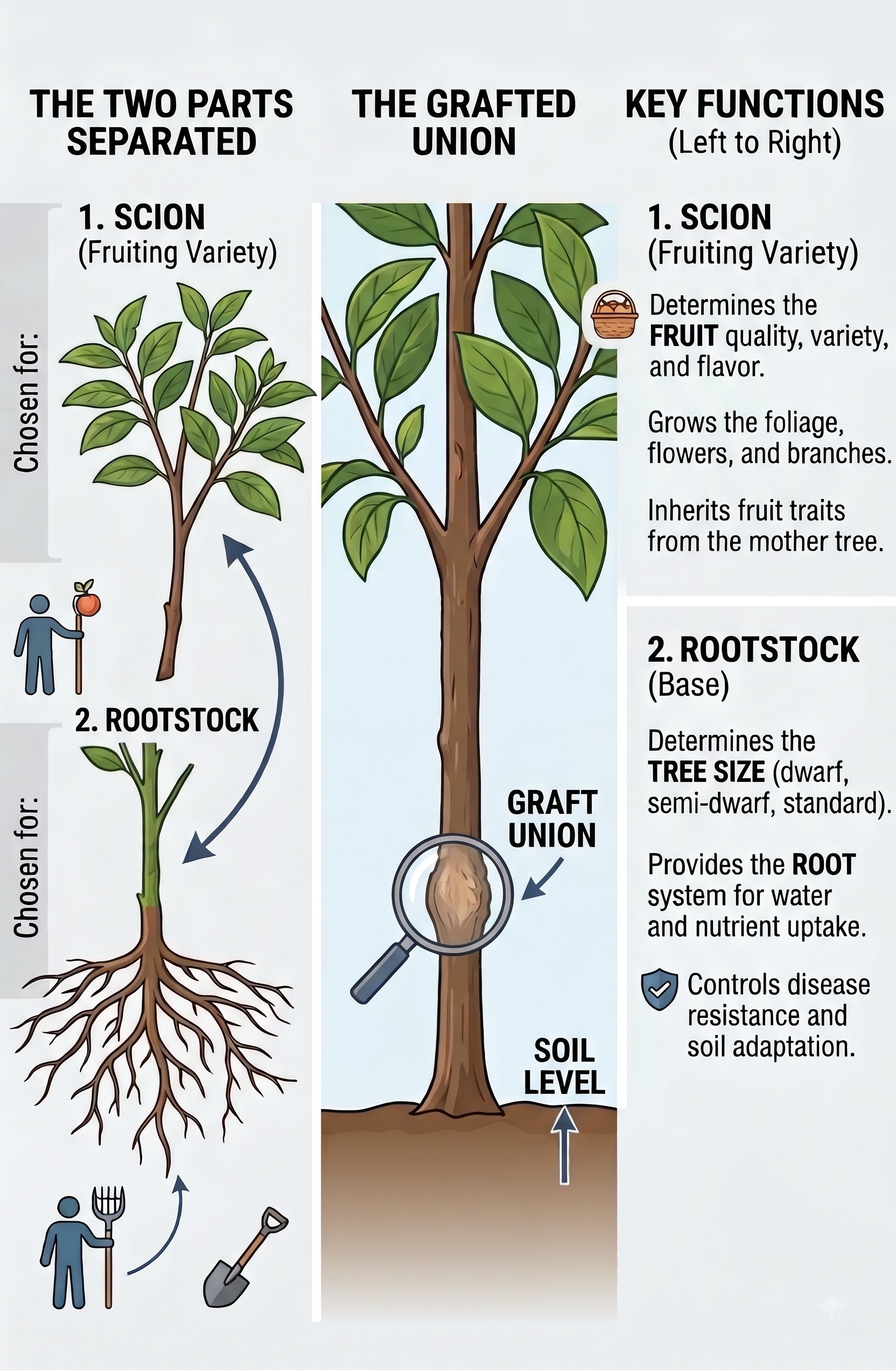
When you buy a fruit tree from a nursery, it isn't just one plant. It is two plants grafted together: a top section (the scion) that produces the delicious fruit, and a bottom section (the rootstock) engineered to control tree size and fight off disease.
The Expert Rule
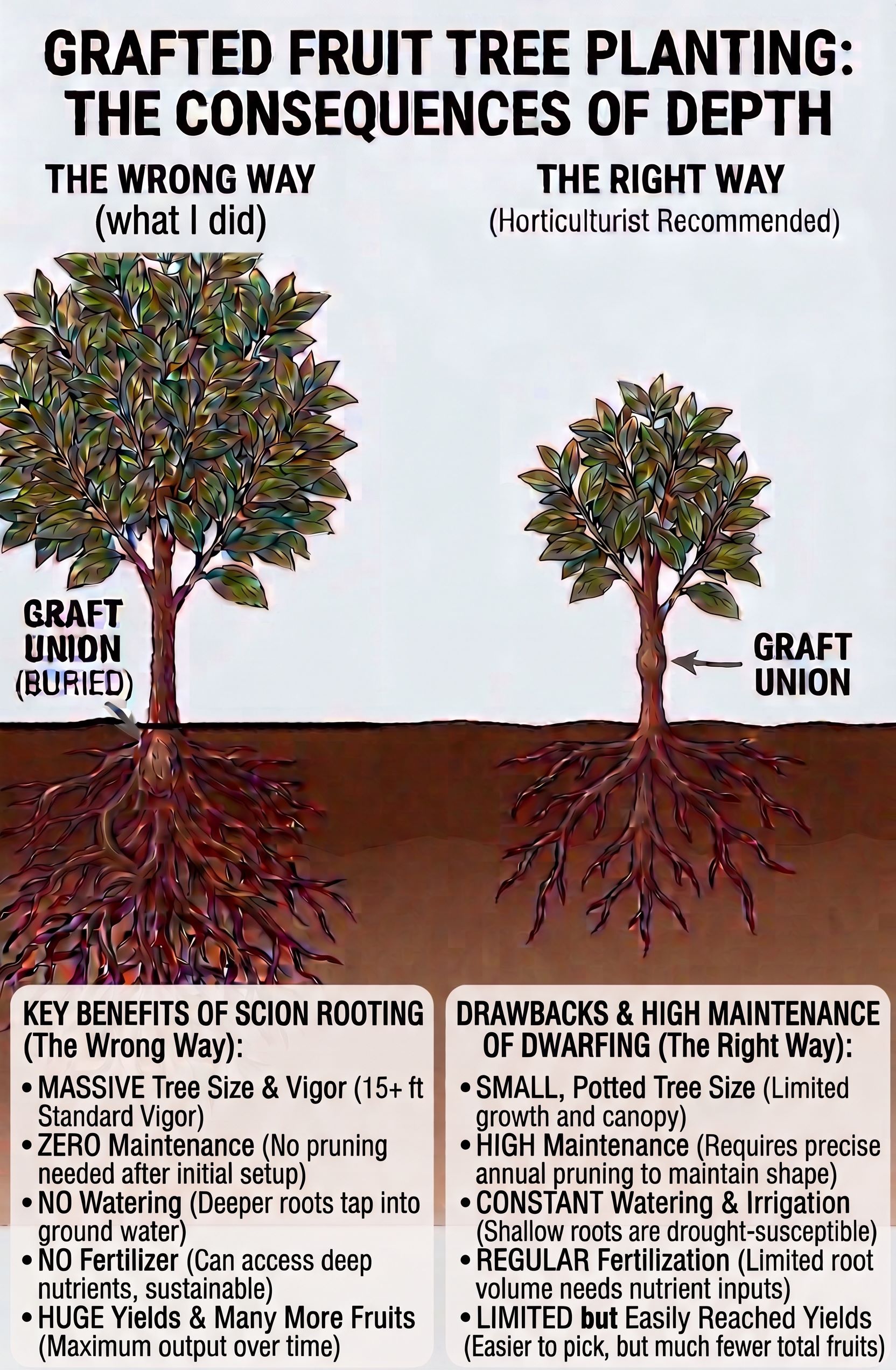
Gardening books tell you to plant the tree so the swollen bump—the graft union—sits 2 to 4 inches above the soil line. This keeps the scion from touching the ground, preserving the dwarfing power of the rootstock below.
What I Actually Did
I buried that graft union completely under the dirt. By doing this, the fruiting scion shot out its own set of deep, aggressive roots directly into the ground, completely bypassing the dwarfing rootstock.
Why My "Mistake" Made My Orchard Unstoppable
✔ Self-Sustaining Water Access
Dwarf roots are shallow and require constant watering. The new scion roots, however, grew naturally deep into the earth—forming a massive, wild root network that taps straight into deep groundwater. That’s why I haven't had to drag out a hose since year two.
✔ Unlimited Underground Minerals
Because the root system dives so deep into subsoil layers, it mines an endless supply of natural minerals and trace nutrients. I never fertilize, yet the trees have all the raw materials they need to pump out giant fruit.
✔ Natural Disease Resilience
A stressed, water-deprived dwarf tree is a magnet for pests and disease. Because my standard-sized trees have unlimited water, optimal mineral uptake, and a huge leafy canopy generating tons of photosynthetic energy, their natural immunity is sky-high. They easily outgrow and shrug off pests or diseases that would knock out a weaker tree.
✔ Best of Both Worlds Yields
Because the nursery rootstock was still there during the early years, it jump-started early fruit production right away. Once the powerful scion roots took over, the trees transitioned seamlessly into permanent, heavy-producing monsters without losing a beat.
The Ultimate Secret: 100% Maintenance-Free Gardening
Here is the absolute best part for any home grower: these trees are completely maintenance-free.
For hobbyists, time is everything. I don't water, I don't fertilize, I don't prune, and I don't do any delicate seasonal upkeep. Absolutely nothing. While traditional orchards demand constant pruning, precise irrigation setups, and endless maintenance schedules just to keep fragile dwarf roots alive, my trees simply take care of themselves.
Handling tall trees really isn't the huge obstacle people make it out to be, either. I don't even pull out a ladder to get to the top of my 15-foot canopy. I just use a simple telescoping fruit picker pole, available at Amazon—and reaching up into the branches to snag those prime, sun-ripened fruits high in the sky is honestly half the fun of the harvest. (In fact, it’s so satisfying that I even made a YouTube video showing off how easy it is to use!).
There is a slight risk of pests killing the scion in its first couple of years. But having planted six fruit trees over 14 years with a 100% success rate, it’s a gamble I’m more than willing to take.
The Takeaway
Commercial orchards hate tall trees because they prioritize uniform, ground-level harvesting for fast-paced labor crews. But when you look at the big picture, commercial operations spend millions of dollars every year just to irrigate, trim, and nurse delicate dwarf orchards along. If you ask me, even commercial growers could benefit from adapting to this—giving up a little control over tree height could save an unbelievable amount of labor and infrastructure costs in the long run.
And for home hobbyists? Let's be honest: harvesting fruit is the most rewarding part of growing your own trees. Doing it this way gains you massive rewards while sacrificing virtually nothing. To me, it's a total no-brainer.
Keep Union Exposed If:
You want a sterile, uniform garden layout that requires constant babysitting, water, and fertilizer.
Bury The Union If:
You want a tough, disease-resistant, zero-labor orchard that takes care of itself and produces thousands of huge, heavy fruits completely on autopilot.
Burying that graft union might just be the best "mistake" you ever make.