It is perfectly understandable why chess names are a battlefield of pronunciation. If you have ever wondered how to say Ding Liren correctly or struggled with Slavic surnames, you are not alone. Learning a foreign language is a massive undertaking, and adapting your vocal muscles to the unique sounds of another culture is far from easy. There is absolutely no shame in making a mistake or defaulting to a westernized version of a name. However, it only becomes a shame when someone is too stubborn to listen, or worse, bullies someone else for using a different pronunciation—especially when that person might actually be the one getting it right.
1. Ian Nepomniachtchi
This is a great example of a name that many chess fans actually get right, even though it looks like an impossible puzzle to an English speaker. Looking at the spelling, you might want to say "Ee-an", but the vast majority of the community has learned the truth: it is "Yan". Even though it does not look that way in the English alphabet, most fans have adapted and now use the correct Russian sound without a second thought.
2. Judit Polgár
Here we have the opposite situation. Almost nobody says her name correctly, despite the rule being quite obvious if you know a little about Eastern European languages. In Hungarian, the "J" is a "Y" sound. So, while the whole world calls her "Joo-dit", her native name is actually "Yoo-deet". It is a simple shift, yet the English "J" is so dominant that the correct version has almost disappeared from international broadcasts.
3. Ding Liren
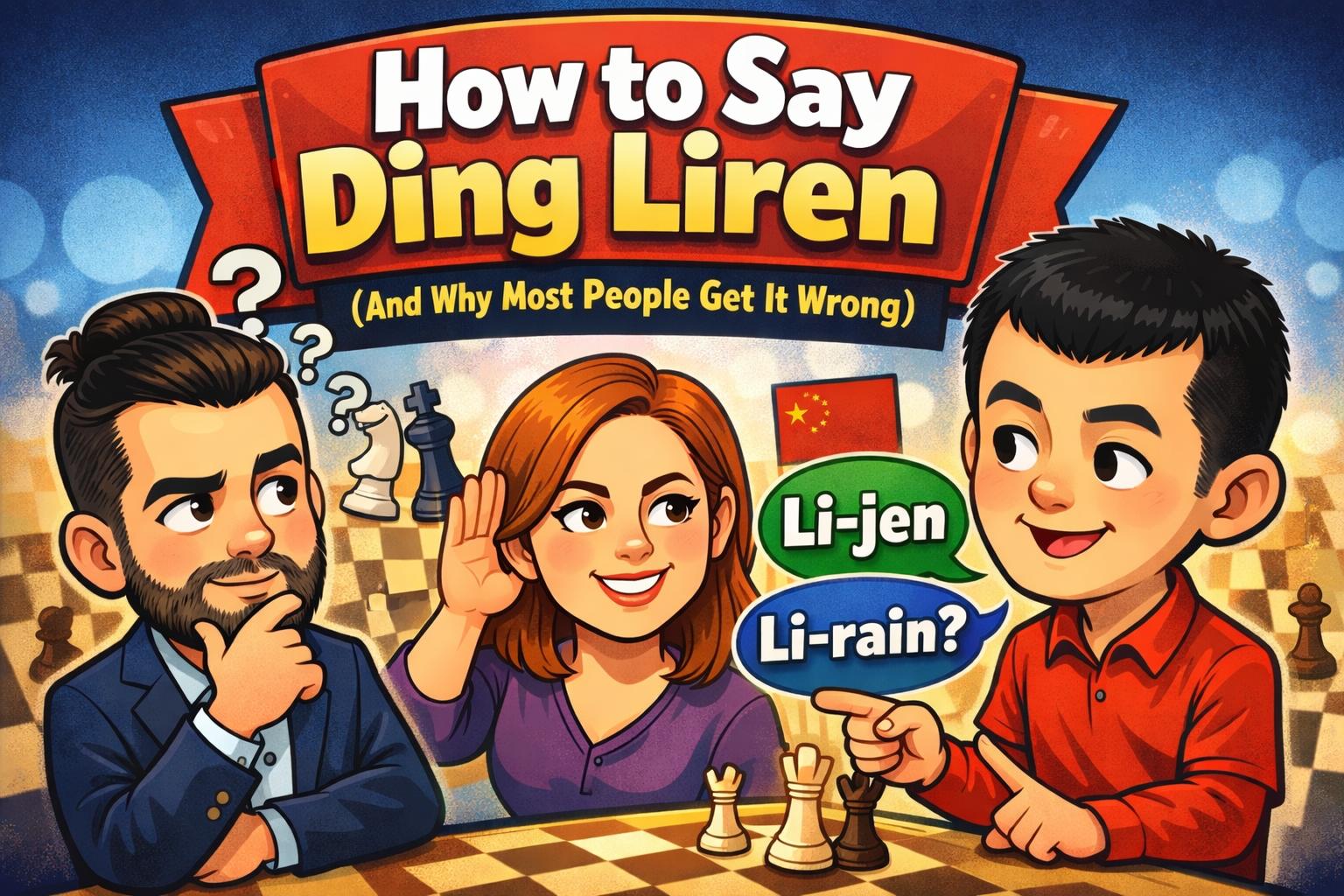
This is the ultimate test of pronunciation. Most English speakers say "Li-rain", treating the ending like the English word for weather. In reality, the Mandarin "r" is much closer to the "J as in John", and the "-en" is the short, neutral sound found in the word "sudden". When you put it together, it sounds much closer to "Li-jen". But please do not say it too close to the "Jen" as in Jennifer, though. The "en" in "Jennifer" is too strong, much stronger than that in "sudden".
Even native speakers like Wei Yi can fall into the trap; after speaking English all day at a tournament, it is incredibly difficult to stay correct, and I saw him say "Li-rain" once. He actually appeared to hesitate and tried to correct it, but eventually gave up—unless you know why, it is hard to understand his body language in that moment. However, Ding himself in fact told you on video how to pronounce his name a few years ago. Please watch my recent video for evidence and learn how to pronounce with Ding himself.
The only non-native speaker in the professional chess circle who consistently gets this close is Anish Giri. It is no surprise—Anish is a genius even outside of chess, speaking six languages fluently. He has the linguistic ear to respect the native phonetics that most of us miss.
The Smoking Gun: Google Translate
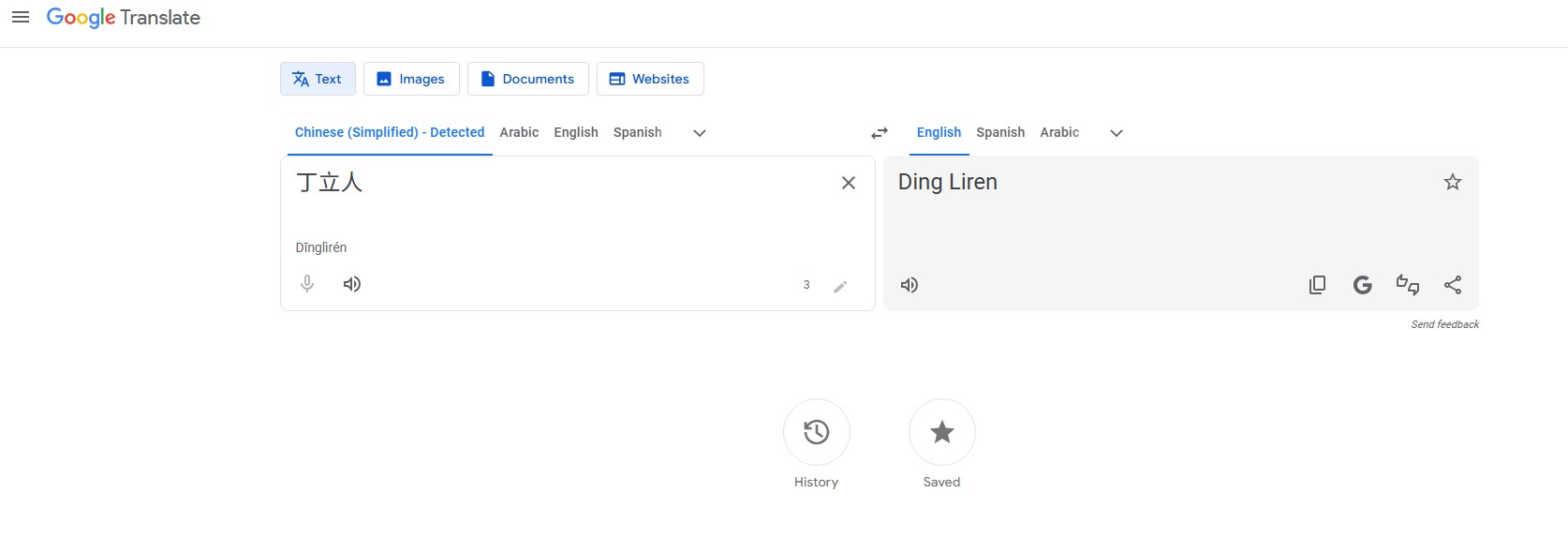
If you still encounter someone stubborn who insists it is "Li-rain", here is the ultimate proof. Go to Google Translate, paste the Chinese characters "丁立人", and set the language to Chinese. When you hit the speaker icon, you will hear the native truth. A screenshot of the translation is shown below.
| Input Method | Resulting Sound | Explanation |
|---|---|---|
| 丁立人 (Chinese Characters) | Li-jen | Correct native engine logic. |
| Ding Liren (English Alphabet) | Li-rain | Incorrect English phonetics. |
If you hit the pronunciation button for the English translation ("Ding Liren"), your familiar "Li-rain" will indeed come up—but that is exactly the point. Google text-to-speech is built on different language engines; it stays in English mode when it sees the alphabet. The system only knows the true, native pronunciation when it is fed the native characters.
Saying it wrong is human. Refusing to learn is a choice. But bullying others for being right? That is just bad sportsmanship.