The Car Battery Secret: Why the Dealer’s "Internal Memo" Is Worth Exactly Nothing
Most people treat car batteries like disposable light bulbs: use them until they die, complain loudly, then buy another one. The truth is far more irritating — most car batteries don’t die naturally. They are slowly and predictably killed years before their time.
Today, I’ll explain why manually charging your car battery year-round is one of the simplest ways to massively extend its life. I’ll also share a story about a dealership that tried to dodge a valid warranty claim using a phrase corporations love when they run out of arguments: "internal memo."
The Modern Battery Killers: Start/Stop and Electrical Gluttony
There was a time when cars were simple. You started the engine, the alternator did its job, and the battery lived a long, boring life. That era is gone.
Modern vehicles use Start/Stop technology. Every red light shuts the engine off. The battery now powers the lights, infotainment screens, climate system, and everything else. When the light turns green, the battery is ordered to restart the engine. Repeating this cycle dozens of times per drive is great for emissions charts, but it is terrible for battery chemistry.
Now add winter packages: heated seats, heated steering wheels, and front and rear defrosters. These are not "small loads." They are electrical gluttons. If your trips are short (as they are for most people), the alternator never has enough time to bring the battery back to full charge.
Lead-acid batteries are designed to live near 100% charge. When they hover at 70–80% because of Start/Stop systems and constant electrical draw, their lifespan collapses. I manually charge my batteries, and my last one lasted almost 9 years — the equivalent of a human living to 100. My current one is 6 years old and still running strong at a "retirement age." That is not luck; it is basic physics.
How to Charge (Even When the Battery Is Hidden on Purpose)
In many modern cars and SUVs, the battery is often buried under the floor or a seat — as if manufacturers are hoping you’ll forget it exists.
You don’t need to find it. Use the dedicated charging terminals in the engine bay. Look for the red plastic cap for positive and a marked chassis ground. That is it. No disassembly required. See the picture below as an example (2006 Volvo XC90 V8).
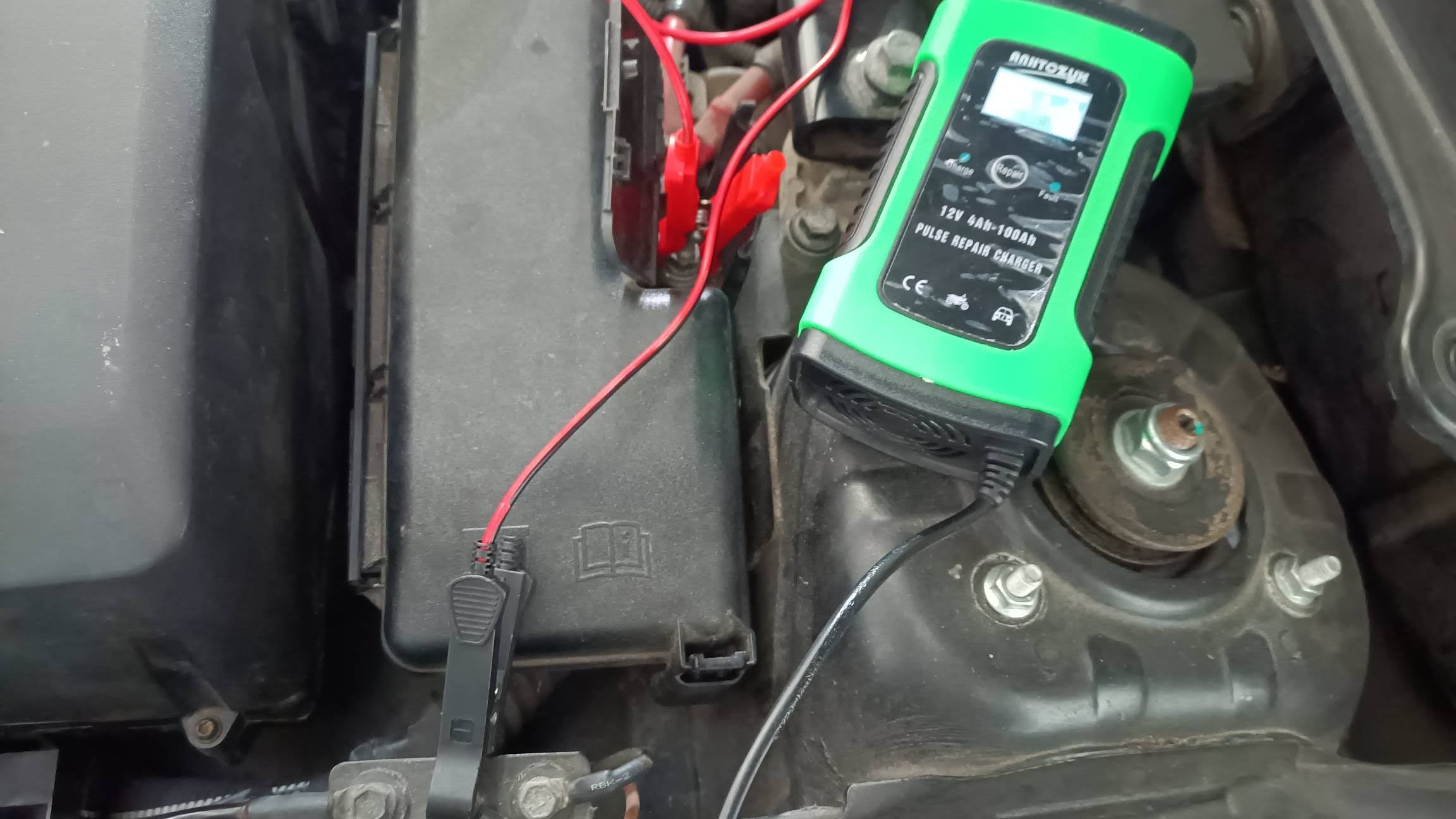
I use a fully automatic smart charger, twice a month in winter and once a month in summer. Plug it in overnight, walk away, and let it work. It shuts off automatically when the battery is full, so overcharging isn’t possible. This matters year-round, but it is absolutely critical in winter. Keeping your battery topped up vastly lowers the chance of getting stuck on the coldest day in a snowstorm in the middle of nowhere. The one I bought is not available anymore, but there are many similar ones, for example, this one. The best $30 (or less) you can ever spend.
The Bonus Story: The "Internal Memo" Fairy Tale
Years ago, we owned a 2011 Mini Cooper that wasn’t driven very much. The battery failed after just two and a half years — comfortably within the warranty period.
I went to the dealership expecting a routine replacement. Instead, the service advisor informed me the battery wasn’t covered. Her reason? An "internal memo" stating they don’t honor battery warranties for customers who don’t drive enough miles.
From a chemistry standpoint, that argument isn’t crazy. From a legal standpoint, it is irrelevant.
A warranty is a contract. I explained it calmly: if a company can secretly modify a written contract using an internal memo I never agreed to, then I am going home to write my own internal memo saying you owe me $5 million. Either internal memos matter — or they don’t.
That was the moment the story fell apart. In hindsight, I regret not asking to see that memo. If it actually existed, the legal department should have been embarrassed. Either way, the tone changed quickly, and the battery was replaced free of charge.
Warranty vs. Internal Memo: Know the Difference
It is important to understand what happened there. A Warranty is a legal contract you "sign" when you buy the car. A Memo is just a corporate suggestion. Unless a specific mileage limit is written in the actual warranty booklet that came with your car, the manufacturer cannot invent one later to save money.
Dealer BS Translation Guide
"Internal memo" = "We’re hoping you don’t understand how contracts work."
"Goodwill exception" = "You’re right, but please don’t say that out loud."
"That is just policy" = "We can’t point to anything you actually signed."
The Lesson
Corporations are bound by the contracts they write, not by unpublished policies invented at a service counter. If the owner’s manual doesn’t list a mileage limit for the battery, a secret memo doesn’t magically create one.
Since then, I’ve charged my batteries regularly. It’s cheaper, easier, and far more enjoyable than debating contract law with someone who just learned the word "policy."
If it is not in the contract, it does not exist.