This is a guide on fixing the notorious weak heating issue on the Volvo XC90 / S80 V8 engine. I’ll walk you through my troubleshooting journey first, but if you’re just here for the solution, feel free to scroll down to "The Actual Fix"—though you’ll miss out on the context of why these pumps fail in the first place!
The Story First: A Brave Move with 251k Miles
I bought this 2006 XC90 back in April 2024 with a whopping 251,000 miles on the clock. Definitely a brave move! Fast forward to today (September 2026), and it’s sitting proud at 266,000 miles. It’s been an absolute tank, but it came with one annoying quirk: on the day I test drove it, the heater was lukewarm at best.
Being April in Ohio, I didn't worry too much about it. But when winter rolled around, shivering in the cabin turned this into a top-priority fix. After the usual coolant flushes and system checks yielded practically zero improvement, I realized I had to dig deeper.
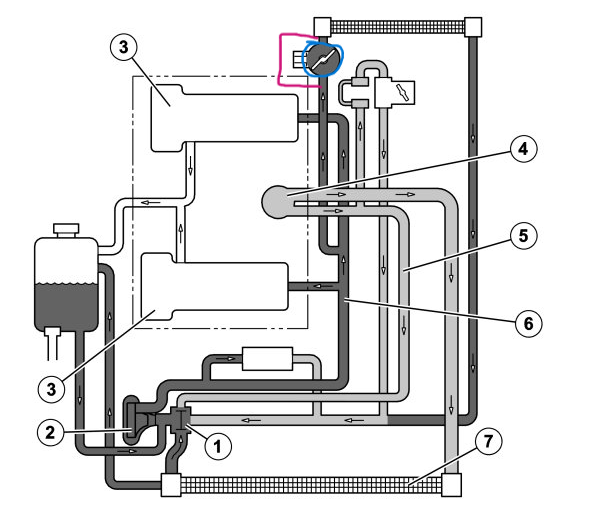
I managed to find a technical diagram of the V8 cooling system online and mapped out the lines (as shown below). To my surprise, I found an electric water pump (circled in blue). Most cars don't have one of these, but since its plumbing feeds straight into the heater core, I knew that had to be the culprit.
The Wrong Diagnosis (and the First Dead Pump)
I hooked up a meter to test for power at the pump while the engine was hot and the heat was cranked to high—and got nothing. Zero volts. I immediately assumed I had bad wiring, a dead relay, or a blown fuse (though F20 was fine). Rather than tracking down the circuit, I decided to be lazy and re-wired the pump directly to a switched 12V source that stayed on whenever the engine was running.
The heat came roaring back! ...for a few days, at least. Then the 18-year-old factory pump gave up the ghost completely.
When I saw the eye-watering $450 price tag for a genuine Volvo pump, I immediately started hunting for alternatives. Sitting right in my toolbox was an aftermarket VW/Audi electric pump ($15-$20 on Amazon). The 3/4" barb connectors were a spot-on match, so I spliced it in and enjoyed a nice, warm cabin for the rest of the winter.
Don't Make My Mistake!
After posting about my fix on SwedeSpeed, respected member volvogod pointed out crucial context: this auxiliary pump only exists on the V8 engine, and the ECU only powers it under specific conditions:
- Outside ambient temp is below 40°F (5°C)
- Cabin controls are actively demanding heat
- Engine is running at low RPM
Because I hadn't measured the factory plug under those exact freezing conditions, I had completely misdiagnosed healthy factory wiring as "broken."
The consequence? Because I left the replacement pump hard-wired to run non-stop, I completely "cooked" that cheap Amazon pump by the following September. It wasn't the pump's fault—it just wasn't engineered to run constantly during hot summer drives!
The Actual Fix
For round two, I aimed for maximum efficiency. The factory pump is tucked way out under the front-left headlight (placed there because it originally shared plumbing with the rare auxiliary fuel-fired heater option). Those long, uninsulated hoses running all the way out there waste a ton of heat. I decided to bring the pump closer to the engine.
The Bypass Loop
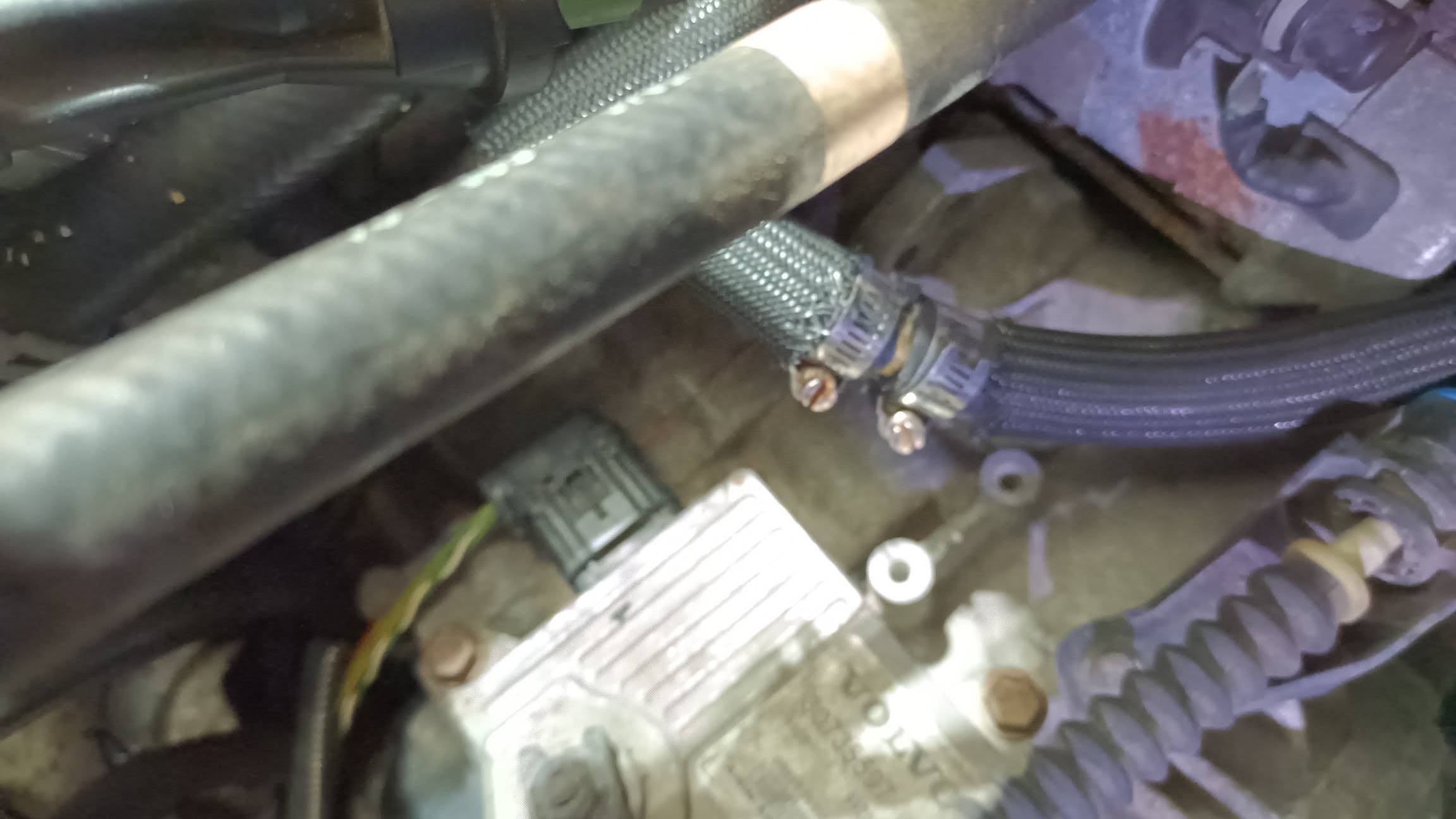
I cut the two long coolant hoses sitting above the transmission and spliced them directly together using a barb adapter and hose clamps (shown below). My hope was that bypassing the headlight loop altogether would keep enough heat near the cabin on its own. It was a little better, but still nowhere near enough for an Ohio winter.
New Pump Location & Proper Wiring
When a freezing day finally rolled around, I re-tested the original factory wiring plug under the proper conditions. Sure enough, 12V power was right there!
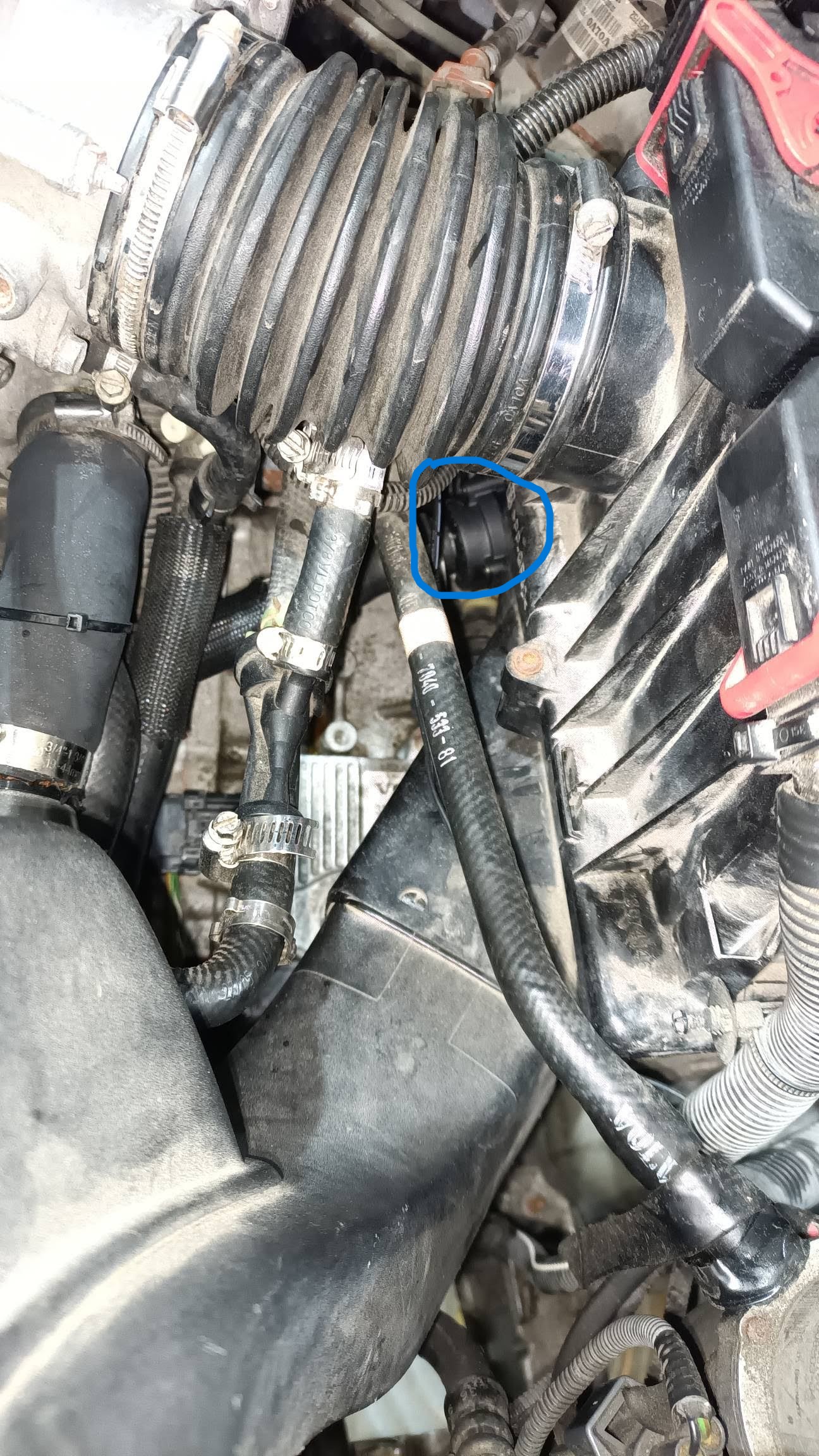
I ordered another aftermarket VW pump (about $20 on Amazon) and mounted it directly under the airbox (circled in blue below). The airbox and surrounding hoses sandwich it securely in place without any custom brackets needed.
Final Tips & Materials
- Measure Power Carefully: The ambient outside temperature readout on your dash must be below 40°F (5°C) for the ECU to feed voltage to the pump harness!
- Wiring: Use Heat Shrink Solder Seal Connectors and a heat gun. It creates a bulletproof weather-sealed bond with no soldering iron required.
- Adapters: If you relocate the pump like I did, grab a 5/8" to 3/4" hose adapter for the engine-side connection.